
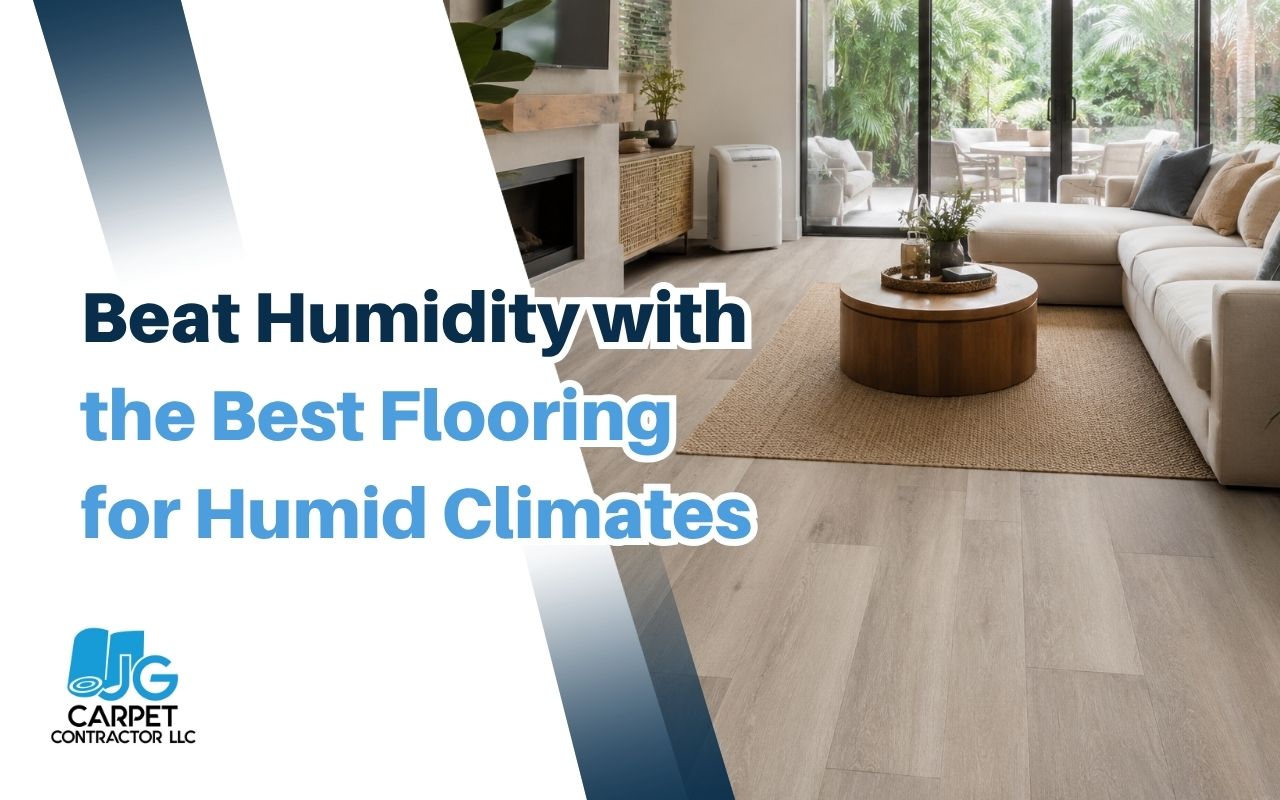
Choosing floors in a humid home takes more than matching colors. Moisture, heat, and daily use can affect how a floor feels and lasts. For many rooms, vinyl floor installation is a smart place to start.
At JG Carpet Contractors LLC, we focus on flooring choices that fit real homes, busy rooms, and changing indoor conditions. The best flooring for humid climates should look good, resist moisture, and help protect the comfort of your space.
Why Humidity Changes Your Flooring Choice
High humidity can make some floors swell, shift, or feel uneven. Solid hardwood is often more sensitive because it expands and contracts with moisture changes. Over time, this can lead to gaps, cupping, or raised boards that affect both appearance and safety.
Moisture also matters below the surface. When damp air reaches seams or the subfloor, it may create problems that are harder to see. Choosing the best flooring for humid climates helps reduce these risks while keeping your home easier to maintain through warm and sticky seasons.
Best Materials for Moisture and Heat
Some materials handle humid rooms better than others. The right option depends on the room, traffic level, style goals, and how much moisture the space sees each day.
- Waterproof vinyl planks work well in kitchens, basements, laundry rooms, and other active spaces.
- Porcelain or ceramic tile resists water and heat when installed with proper grout care.
- Engineered wood gives a warmer wood look with better stability than solid hardwood.
- Water-resistant laminate can work in lower-moisture rooms when spills are cleaned fast.
With JG Carpet Contractors LLC, you can compare practical flooring options without losing sight of the look you want. The goal is to choose a surface that supports daily comfort and long-term value.
How Waterproof Vinyl Planks Handle Humid Rooms
Waterproof vinyl planks are popular because they combine style with strong moisture resistance. Many options have a waterproof core, a protective surface layer, and edges designed to reduce water movement through the seams.
This makes vinyl a useful LVP summer-proof choice for rooms that feel damp during hot months. It can also copy the look of wood, stone, or tile without the same moisture concerns. For more guidance, explore our waterproof vinyl plank installation services.
Is Engineered Wood Better Than Hardwood Here?
Engineered wood is often a better choice than solid hardwood in humid areas. It has layers that help limit movement when moisture levels rise or fall. This structure gives it more stability while still offering a real wood surface.
Solid hardwood can still be beautiful, but it may need more climate control and care. If you want a wood look with less risk, engineered wood or vinyl may be a safer direction. Our team at JG Carpet Contractors LLC can explain which option fits each room.
Moisture Control Flooring Features That Matter
Moisture control flooring should do more than look durable on a sample board. The best flooring for humid climates needs features that protect the surface, seams, and subfloor from common moisture problems.
- Waterproof or water-resistant cores help reduce swelling.
- Sealed edges limit moisture movement between planks.
- Smooth surfaces make spills and dirt easier to clean.
- Proper underlayment supports comfort and moisture control.
- Professional installation helps seams fit tight and level.
It also helps to understand how different surfaces compare. This guide on laminate and vinyl flooring differences can make your decision easier.
Simple Care Steps for Humid Homes
Even strong flooring lasts longer with good care. Humidity control, regular cleaning, and fast spill cleanup can help protect your investment and keep each room feeling fresh.
- Wipe spills as soon as they happen.
- Use a damp mop instead of soaking the floor.
- Run air conditioning or a dehumidifier during humid months.
- Choose breathable rugs in high-traffic areas.
- Follow the care instructions for your exact flooring type.
When you choose JG Carpet Contractors LLC, we can help you understand care needs before installation begins. This keeps your flooring choice practical, not just attractive.
Frequently Asked Questions
What is the best flooring for humid climates?
The best flooring for humid climates usually includes waterproof vinyl planks, porcelain tile, ceramic tile, and some engineered wood products. The right choice depends on the room, moisture level, and style you prefer.
Are waterproof vinyl planks good for summer humidity?
Yes. Waterproof vinyl planks are a strong LVP summer-proof option because they resist moisture, clean easily, and stay stable in many humid rooms. You can review our vinyl flooring installation service for more details.
Can laminate flooring work in humid homes?
Laminate can work in some humid homes when it is water-resistant and installed in the right room. It should not stay wet. This laminate versus vinyl flooring guide explains the key differences.
Does moisture control flooring help protect the subfloor?
Yes, moisture control flooring can help reduce water movement into lower layers when the right materials and installation methods are used. Sealed seams, proper underlayment, and fast spill cleanup all make a difference.
How do I start choosing flooring for a humid room?
Start by thinking about the room, traffic, moisture exposure, and the look you want. With JG Carpet Contractors LLC, you can request flooring guidance based on your home and comfort goals.
Plan a Cooler, Drier Flooring Upgrade
The best flooring for humid climates should make your home feel easier to live in, not harder to care for. Waterproof vinyl planks, tile, engineered wood, and selected moisture control flooring can all help when chosen for the right space.
When you are ready to compare practical options, contact our flooring team for support. We will help you choose flooring that fits your rooms, handles humidity, and keeps your home looking comfortable through every season.