
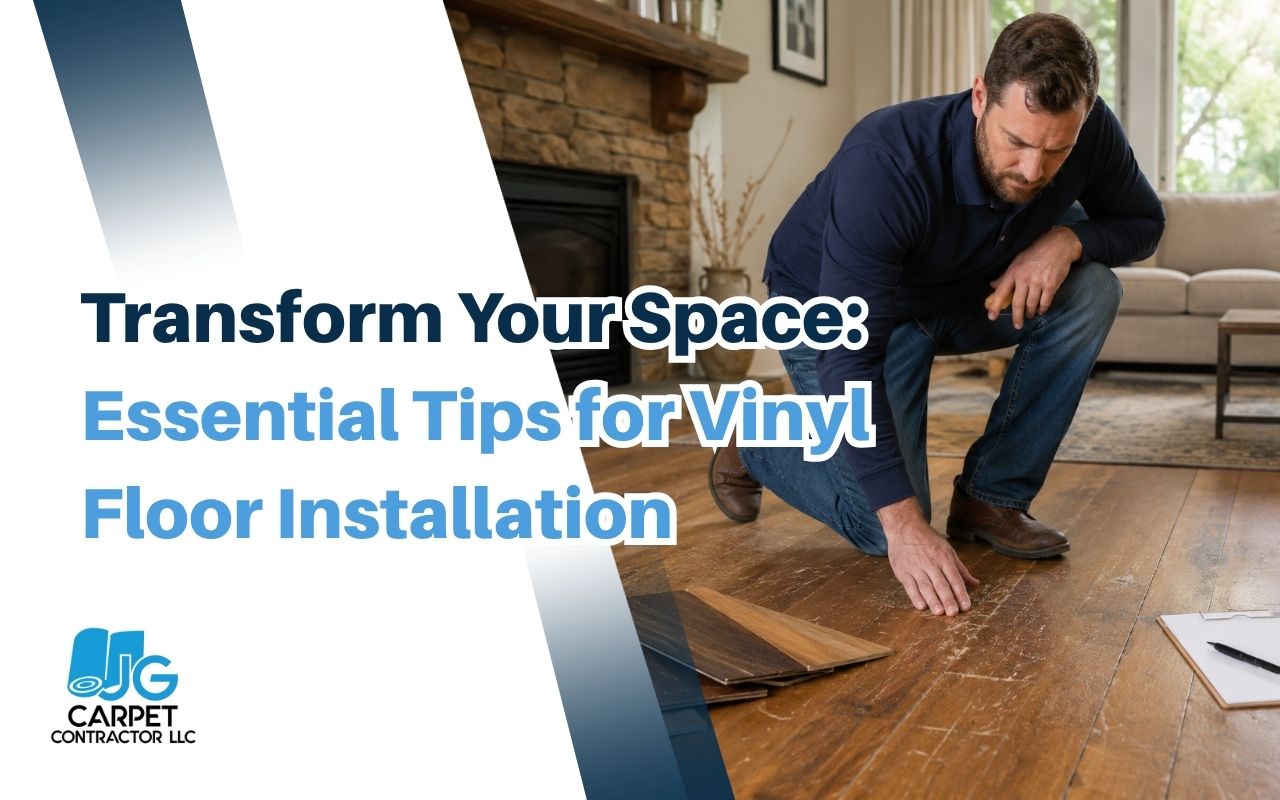
Vinyl flooring can refresh a room without a full remodel. At JG Carpet Contractors LLC, we focus on careful planning, clean prep, and a smooth finish for Maryland homes. You can explore our vinyl floor installation services in Maryland before starting your project.
A good floor starts before the first plank is placed. The right material, a solid subfloor, and smart layout choices can help your new surface look clean, feel stable, and last longer.
Choosing Vinyl Flooring for Maryland Homes
Vinyl flooring comes in planks, tiles, and sheets. Each option fits a different room and style. Planks can look like wood, tiles can resemble stone, and sheet vinyl can create a smooth surface with fewer seams.
Before your vinyl floor installation begins, think about traffic, moisture, furniture, and daily use. Kitchens, laundry rooms, basements, and entry areas may need a stronger wear layer. Bedrooms or light-use spaces may allow more design flexibility.
What Should You Check Before Installation?
Look closely at the room before choosing materials. Measure the space, note doorways and closets, and check for corners or uneven edges. This step helps reduce waste and keeps the finished layout balanced.
With JG Carpet Contractors LLC, you can expect planning that respects your space and your flooring goals. Good preparation also helps prevent common problems like gaps, lifting edges, and uneven seams.
LVP Install Prep That Protects Your Floor
LVP install prep matters because vinyl reacts to the surface below it. A clean, dry, and flat base helps the floor sit properly. Skipping prep can make even a quality product look uneven or wear too soon.
- Remove furniture, old flooring, loose debris, and adhesive residue.
- Check the room for moisture before placing new materials.
- Let vinyl flooring acclimate as the manufacturer recommends.
- Plan plank direction before cutting or locking pieces together.
Good prep also includes reading product instructions. Some floors need an expansion gap, while others need adhesive and rolling. These details can affect how the floor performs after installation.
Subfloor Requirements for a Smooth Finish
Subfloor requirements are one of the most important parts of any flooring project. Vinyl needs a surface that is flat, strong, clean, and dry. Small dips or bumps can show through the floor or affect how the seams close.
- Concrete should be checked for moisture before installation.
- Wood subfloors should not have squeaks or loose boards.
- Low spots may need an approved leveling compound.
- Dust and grit should be removed before flooring is placed.
Our team at JG Carpet Contractors LLC can help identify issues that may affect the final result. Careful subfloor preparation supports a better-looking floor and helps reduce future repair concerns.
Vinyl Install Mistakes to Avoid Early
Many vinyl install mistakes to avoid happen before the floor is fully placed. Rushing layout, skipping acclimation, or ignoring uneven areas can lead to visible problems later. Planning the details early protects the look and feel of the room.
- Do not install over dirt, dust, or loose materials.
- Do not force planks together if seams are misaligned.
- Do not ignore product instructions for spacing or adhesive.
- Do not move heavy furniture back too soon after glue-down work.
For more guidance, review our tips on common flooring installation mistakes in Maryland. A careful approach can save time, reduce stress, and help your floor look more professional.
Simple Care After Your New Flooring
After installation, simple habits can protect your new floor. Sweep or vacuum often, clean spills quickly, and use floor-safe cleaners. Avoid harsh products unless the flooring maker allows them.
Furniture pads can help reduce dents and scratches. Entry mats can also limit grit that gets tracked inside. These small steps support a cleaner surface and help your vinyl floor installation stay attractive through daily use.
Frequently Asked Questions
How long should vinyl flooring acclimate before installation?
Many products need time to adjust to the room before installation. The exact time depends on the manufacturer. Before scheduling professional vinyl floor installation, check the product instructions so the material is handled correctly.
Can vinyl flooring go over an old floor?
Sometimes it can, but the old surface must be stable, clean, flat, and dry. Loose tiles, soft spots, or rough areas should be corrected first. The wrong base can cause visible marks or movement.
Why does subfloor prep matter so much?
Vinyl is flexible, so it can show problems from the surface below. Strong prep helps prevent bumps, gaps, and lifting. When you choose JG Carpet Contractors LLC, we pay attention to these details before the finish goes down.
What are the most common vinyl installation problems?
Common issues include poor seams, trapped debris, uneven subfloors, skipped acclimation, and rushed adhesive work. Our guide to flooring installation mistakes to avoid explains why careful planning matters.
When should I contact a flooring installer?
You should reach out when you want help choosing materials, checking the room, or planning the work. You can use our flooring contact page to discuss your space and next steps.
Plan Your Vinyl Floor Project Confidently
A successful vinyl floor installation depends on preparation, product choice, and careful finishing. From LVP install prep to subfloor requirements, each step affects how the room looks and feels after the work is complete.
When you choose JG Carpet Contractors LLC, we help you move forward with a clear plan for your Maryland home. Share your room details through our vinyl flooring project contact page and take the next step toward a cleaner, more comfortable floor.