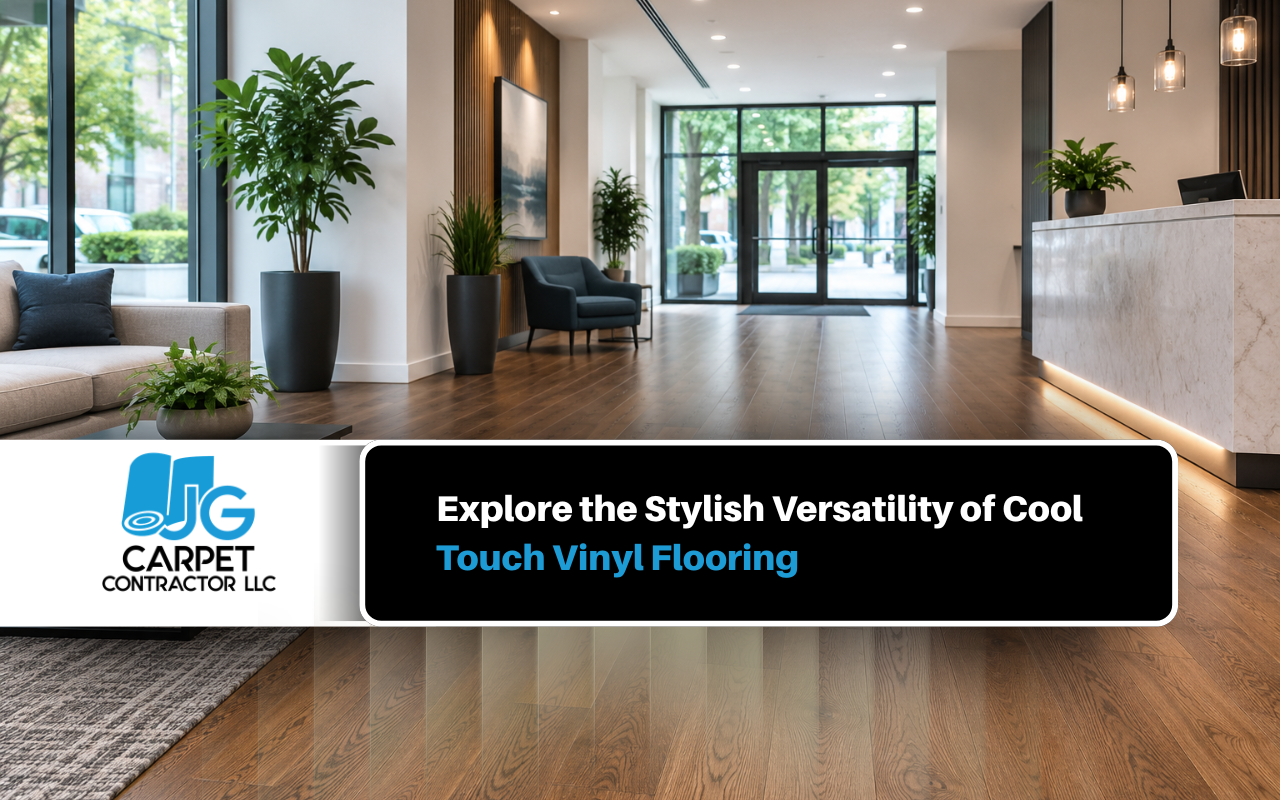
Cool touch vinyl flooring can make warm rooms feel more comfortable without giving up style. At JG Carpet Contractors LLC, we help homeowners choose flooring that supports daily comfort, simple care, and a clean look for busy spaces.
When you want a floor that feels better under bare feet, professional vinyl floor installation can help you get a smooth finish and the right product for your home.
A Cooler Choice for Warm Indoor Spaces
Cool touch vinyl flooring is designed for homes where heat can make floors feel uncomfortable. It can be a smart choice for kitchens, living rooms, sunlit areas, and other rooms where comfort matters during warmer months.
This type of temperature-stable flooring works well for homeowners who want a surface that looks polished and feels pleasant. It gives you practical value while still offering wood, stone, and modern design options.
How Does This Flooring Stay Comfortable?
The comfort comes from layered construction. The top layer protects the floor, while the core supports stability and helps reduce the way heat feels on the surface. With JG Carpet Contractors LLC, you get guidance on options that match your room and daily use.
Summer-friendly LVP can help reduce the hot surface feel that some hard floors develop in direct light. It is not a cooling system, but it can support a more comfortable indoor experience.
Benefits That Matter During Hot Weather
Cool touch vinyl flooring offers more than a comfortable feel. It also works well in active homes where cleaning, durability, and visual appeal all matter.
- Comfortable surface for bare feet in warm rooms
- Stylish looks that can resemble wood, stone, or tile
- Moisture resistance for kitchens, bathrooms, and entry areas
- Simple cleaning with regular sweeping and gentle mopping
- Practical performance for homes with children or pets
For more design ideas, our guide to vinyl plank flooring styles can help you compare looks, textures, and room uses.
Designs That Fit Modern Home Styles
Today’s vinyl floors come in many colors, plank sizes, textures, and patterns. You can choose soft wood tones for a relaxed room, stone looks for a clean finish, or bold patterns for a more modern space.
Our team at JG Carpet Contractors LLC can help you think about lighting, wall colors, furniture, and traffic before choosing a floor. This helps the final result feel natural instead of forced.
Where Summer-Friendly LVP Works Best
Summer-friendly LVP is useful in spaces that get regular foot traffic or warmer indoor temperatures. It can also be a strong option when you want comfort without the harder feel of tile.
- Kitchens that need easy cleaning and moisture resistance
- Living rooms where comfort and appearance both matter
- Bedrooms where a softer feel underfoot is helpful
- Hallways that need durable, low-maintenance flooring
- Bathrooms or laundry areas when the product is rated for moisture
A planned vinyl flooring installation can help each room get the right layout, fit, and finish.
Simple Care for Lasting Floor Comfort
Routine care helps your floor keep its appearance and comfortable feel. Most homes only need simple cleaning habits to protect the wear layer and reduce surface damage.
- Sweep or vacuum often to remove dirt and grit
- Use a mild cleaner that is safe for vinyl flooring
- Wipe spills quickly to help prevent staining
- Place felt pads under furniture legs
- Use mats near doors to reduce tracked-in debris
Avoid harsh scrubbers, steam mops, and strong chemicals unless the product maker allows them. Gentle care helps temperature-stable flooring stay attractive and comfortable for everyday use.
Frequently Asked Questions
Is cool touch vinyl flooring good for sunny rooms?
Cool touch vinyl flooring can be a good option for sunny rooms because it is made to feel more comfortable than some hard surfaces. For a better result, pair the right product with careful vinyl floor installation.
What makes it one of the best floors for heat?
It can be one of the best floors for heat because it offers a comfortable surface, simple care, and many design options. It also avoids some of the harder feel that tile can have in warm spaces.
Can I use this flooring in kitchens or bathrooms?
Yes, many vinyl flooring products are suitable for kitchens or bathrooms when they are rated for moisture. You can review product choices and room needs through our vinyl plank flooring guide.
Does this flooring need special maintenance?
No, it usually needs simple care. Sweep often, mop with a mild cleaner, and protect it from sharp furniture edges. When you choose JG Carpet Contractors LLC, we can explain basic care steps for your selected floor.
How do I choose the right vinyl floor?
Start with your room use, design style, foot traffic, and comfort goals. A flooring professional can help you compare thickness, wear layers, color, and installation needs through vinyl floor installation planning.
Plan a Comfortable Vinyl Flooring Upgrade
Cool touch vinyl flooring can help your home feel more pleasant during warm seasons while giving each room a clean and stylish finish. At JG Carpet Contractors LLC, we focus on flooring choices that support comfort, daily use, and your design goals.
Ready to explore the right option for your space? Share your room details through our contact page and take the next step toward a cooler, easier-to-maintain floor.

Step Into a vacation home where every room feels relaxed, clean, and ready for guests. With vinyl flooring for vacation homes, sandy feet, spills, and busy weekends become easier to manage without giving up style.
Our team helps you choose floors that match your coastal look and daily needs. From waterproof LVP to warm wood looks, with JG Carpet Contractors LLC, you get clear guidance for creating a beautiful retreat with less upkeep.
Smart Reasons To Choose Vinyl In Vacation Homes
Vacation homes need floors that can handle more than normal daily use. Guests, pets, wet towels, and outdoor dirt can wear down weak surfaces fast. Vinyl flooring for vacation homes gives you a strong and attractive option for busy rooms.
These floors come in many looks, including wood, stone, and tile designs. As a result, you can create a clean beach style while choosing easy-maintenance floors that stay fresh with simple care.
- Resists stains from spills and everyday use
- Handles sand, moisture, and steady foot traffic
- Works well in kitchens, bathrooms, bedrooms, and entryways
- Offers many design choices for coastal homes
Coastal Styles That Make Rooms Feel Brighter
Light colors often work best in beach homes because they make rooms feel open and calm. Soft gray, whitewashed wood, pale beige, and warm natural tones can help reflect sunlight and support a relaxed vacation mood.
When reviewing beach house flooring ideas, think about the mood you want in each room. Smooth wood looks can feel simple and classic, while soft stone patterns can bring a clean finish to bathrooms and kitchens.
How Can Waterproof Floors Support Busy Getaways?
Water, sand, and spills are common in coastal homes. Waterproof LVP helps protect your floors in wet areas, so you can enjoy your space instead of worrying about every splash near the door, sink, or laundry room.
At JG Carpet Contractors LLC, we help you compare flooring choices that fit your home and guest use. For more design guidance, explore our LVT flooring benefits before planning your update.
- Use waterproof LVP in bathrooms, kitchens, and mudrooms
- Choose textured surfaces to help hide light dirt
- Add mats near doors to reduce sand indoors
- Pick durable wear layers for rental properties
Simple Cleaning Habits For Long-Lasting Floors
Clean floors make every guest stay feel better. Sweep or vacuum often with a hard-floor setting to remove grit before it scratches the surface. Then, use a damp mop with a vinyl-safe cleaner when deeper care is needed.
Avoid harsh products like bleach, ammonia, wax cleaners, and rough scrub pads. Also, clean spills quickly, lift furniture instead of dragging it, and use pads under chairs and tables to protect your easy-maintenance floors.
Installation Details That Help Floors Perform Better
A good installation starts with a clean, level, and dry surface. Small bumps, dust, or uneven spots can cause gaps or movement later, especially in vacation homes where humidity and heavy use are common.
Click-lock and glue-down systems can both work well, depending on the room and product. Our team can help you choose the right method so vinyl flooring for vacation homes looks smooth and performs well over time.
- Check the subfloor before installation begins
- Plan plank direction for the best room flow
- Leave proper spacing when the product requires it
- Follow the flooring maker’s care and install guide
Design Choices That Fit Your Coastal Lifestyle
Your floors should support the way you use your home. A quiet family retreat may need soft natural tones, while a rental property may need stronger textures that hide light wear between cleanings.
Our team at JG Carpet Contractors LLC helps homeowners match style with real-life needs. You can also view current ideas in our guide to luxury vinyl plank trends for more inspiration.
Frequently Asked Questions
Is vinyl flooring good for vacation rentals?
Yes. Vinyl flooring for vacation homes works well in rentals because it is durable, simple to clean, and available in many styles that help rooms look welcoming.
Can vinyl floors handle sand and moisture?
Yes. Sand should be swept often, and moisture should be wiped quickly. With proper care, waterproof LVP can handle many common beach house conditions.
What rooms are best for vinyl plank flooring?
Vinyl plank works well in kitchens, bathrooms, bedrooms, living rooms, laundry areas, and entryways. It is a flexible choice for many vacation home layouts.
How often should vacation home floors be cleaned?
Floors should be swept after busy stays and damp mopped when needed. Rental homes may need a set cleaning routine after each guest visit.
Can JG Carpet Contractors LLC guide my flooring choice?
Yes. When you contact JG Carpet Contractors LLC, we help you compare styles, finishes, and performance needs so your flooring choice fits your space, guests, and long-term care goals.
Start Your Vacation Home Flooring Upgrade
The right floor can make your vacation home easier to enjoy and easier to maintain. With smart beach house flooring ideas, simple care habits, and the right product, your rooms can stay beautiful through every season.
At JG Carpet Contractors LLC, we are ready to help you plan a flooring update that feels practical, stylish, and built for real life. Contact our flooring team to talk about your next project.
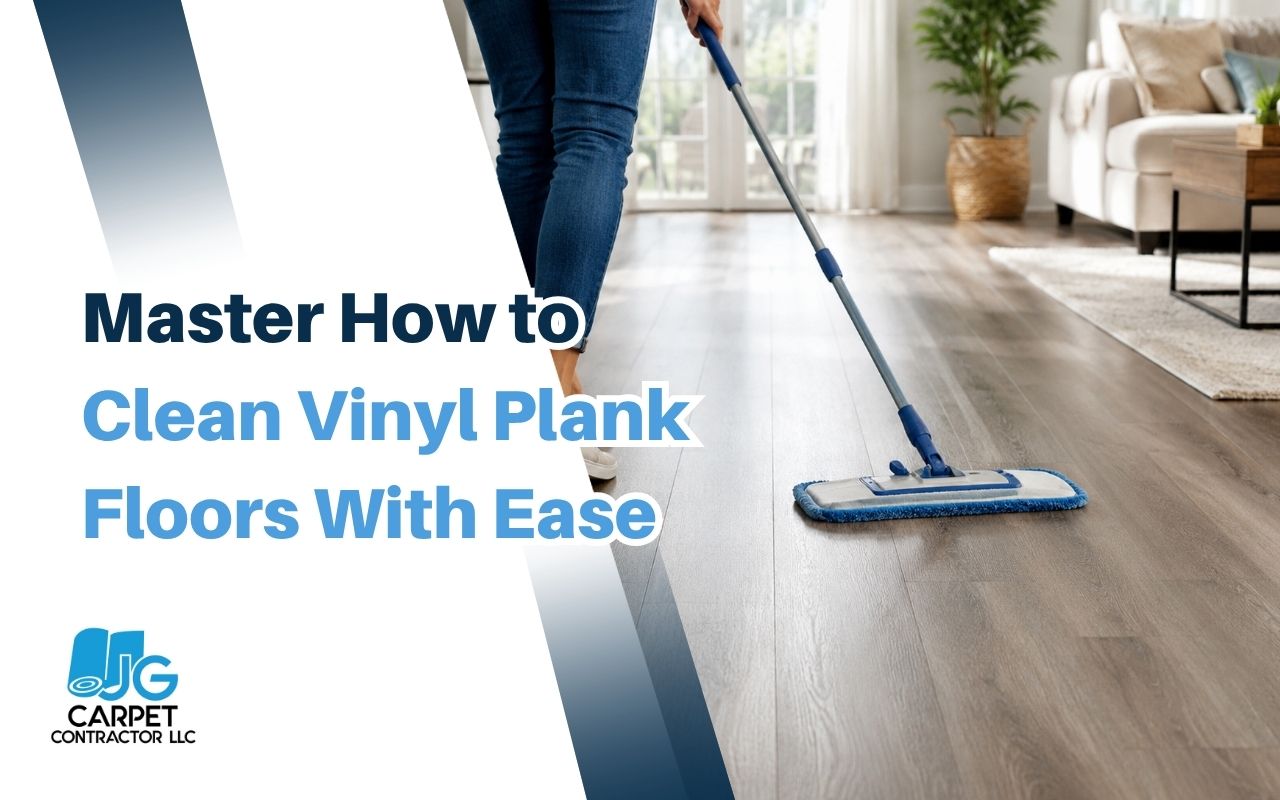
Vinyl plank floors can give your home the warm look of wood with easier care. Still, smudges, dull spots, and daily dirt can hide their shine when the floor is not cleaned the right way.
In this guide, we share how to clean vinyl plank floors with simple steps, gentle tools, and safe products for LVP. With the right routine, you can protect the surface and enjoy a clean, streak-free finish.
Know What Makes Vinyl Plank Floors Different
Vinyl plank flooring is made to handle busy homes, spills, and regular foot traffic. Most planks have a clear wear layer, a design layer, a strong vinyl core, and a backing layer that helps with stability.
At JG Carpet Contractors LLC, we know this layered design needs gentle care. Harsh cleaners, rough pads, and too much water can harm the surface, even when the floor looks strong.
Choose Simple Tools For Safer Floor Care
The right tools make cleaning easier and help protect the finish. Before you mop, remove loose dirt so small particles do not scratch the floor.
- Use a soft broom or dust mop for daily dirt.
- Choose a microfiber mop for damp cleaning.
- Keep a clean bucket for your mild floor solution.
- Avoid steam mops, rough brushes, and soaking wet pads.
When you learn how to clean vinyl plank floors, simple tools often work better than strong products. For more care tips, you can also review our guide on how to clean vinyl tile floors.
Prepare The Floor Before You Start Mopping
Start by moving chairs, rugs, and small items out of the way. Then sweep or vacuum the floor with a safe floor setting to remove dust, crumbs, and pet hair.
Next, check for sticky spots or small stains. Use a damp microfiber cloth with a mild cleaner to lift the mess before mopping the full area. This step helps you get a cleaner, streak-free finish.
How Can You Mop Without Leaving Streaks?
Use warm water and a gentle, pH-neutral cleaner made for vinyl floors. Wring the mop well, because a lightly damp mop is safer than a wet one.
- Mop in small sections so the floor does not stay wet.
- Rinse the mop often to avoid spreading dirt.
- Dry the floor with a clean microfiber cloth.
- Repeat only where needed instead of over-cleaning the whole room.
At JG Carpet Contractors LLC, we recommend this careful method because it keeps the floor clear, smooth, and easy to maintain over time.
Remove Stains Without Damaging The Surface
For spills, act quickly. Wipe the area with a soft cloth and warm water first. If the mark remains, use a small amount of mild cleaner and rub gently in a circular motion.
For sticky residue, choose safe products for LVP and avoid strong chemicals like bleach or ammonia. When a stain is harder to remove, test the cleaner in a hidden spot before using it on a visible area.
Keep Daily Dirt From Wearing Down Floors
Regular care helps your floor look better and last longer. A few simple habits can stop grit, moisture, and furniture marks from becoming bigger problems.
- Place mats near doors to catch dirt and water.
- Add felt pads under chairs, tables, and heavy furniture.
- Clean spills soon so moisture does not sit on seams.
- Rotate rugs from time to time to reduce uneven wear.
At JG Carpet Contractors LLC, we also suggest checking product labels before cleaning. The safest routine is the one that protects the wear layer while keeping the floor bright and smooth.
Frequently Asked Questions
How often should I clean vinyl plank floors?
Sweep or dust mop daily in busy areas. Damp mop once a week, or as needed, with a mild cleaner and a well-wrung microfiber mop.
Can I use vinegar on vinyl plank floors?
A small amount of diluted vinegar may work for some floors, but always check the floor maker’s care guide first. A pH-neutral cleaner is often a safer choice.
What products should I avoid on LVP?
Avoid bleach, ammonia, wax, oil soap, abrasive powder, and steam cleaning. These products can dull, weaken, or damage the wear layer.
Why does my floor look cloudy after mopping?
Cloudiness often comes from too much cleaner, dirty mop water, or leftover residue. Rinse with clean water and dry the surface with microfiber cloths.
Can I contact your team for vinyl plank flooring needs?
Yes. When customers contact JG Carpet Contractors LLC, we can answer flooring questions, share care guidance, and discuss installation support through our contact page.
Enjoy Cleaner Floors With Better Long-Term Care
Knowing how to clean vinyl plank floors helps you protect their shine without making care difficult. Gentle tools, light moisture, and safe products for LVP can keep each room looking fresh.
With JG Carpet Contractors LLC, you get clear guidance when your flooring needs go beyond cleaning. You can also learn more about installing LifeProof vinyl plank flooring for a smoother next project.
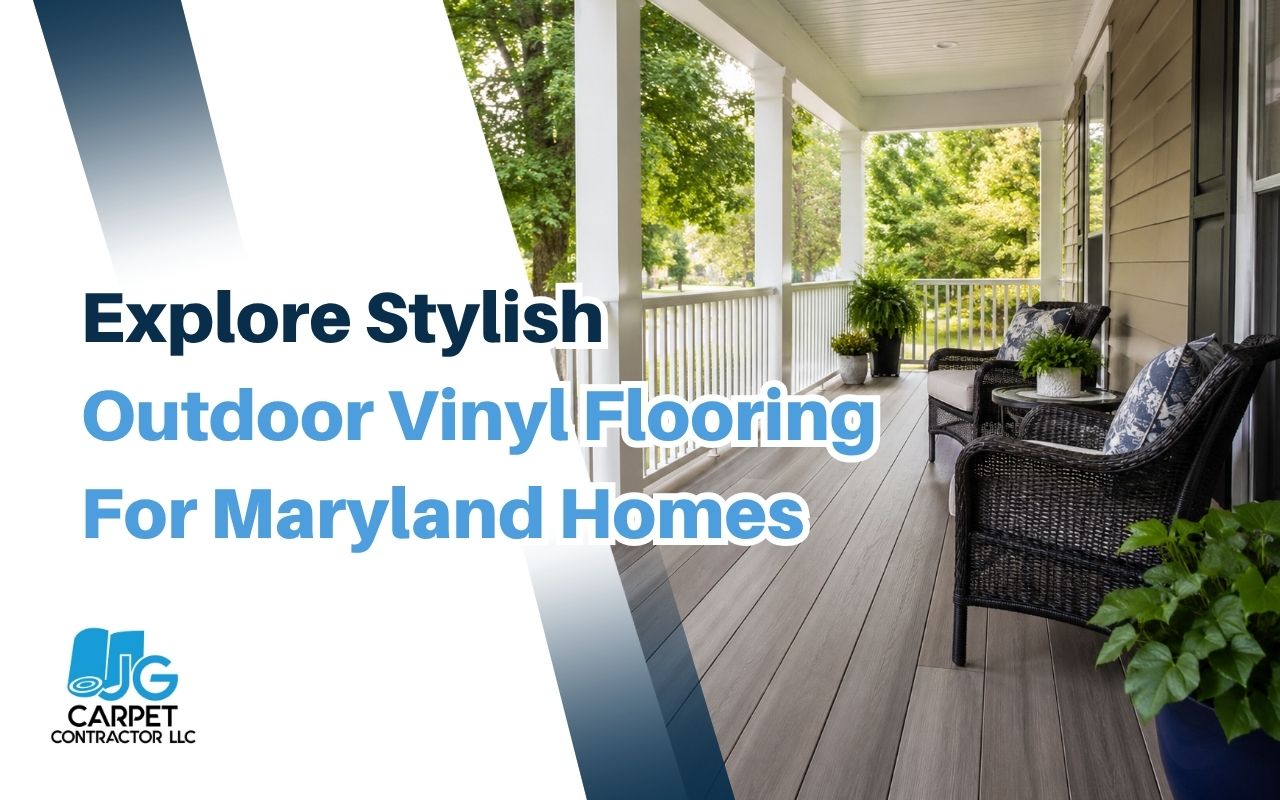
Step into a better outdoor space with floors that feel warm, look beautiful, and handle daily life. With outdoor vinyl flooring in Maryland, you can refresh a sunroom, porch, patio, or enclosed area with style that feels simple and lasting.
At JG Carpet Contractors LLC, we help homeowners choose floors that balance comfort, strength, and design. The right vinyl can turn an ordinary space into a clean, inviting area for relaxing, hosting, and enjoying every season.
Outdoor Vinyl Options Built For Maryland Spaces
Choosing the right style starts with how you use the space. Some areas need stronger moisture control, while others need a softer look that connects the home with the outdoors.
- Luxury vinyl planks can give you a warm wood look without the harder care that real wood needs.
- Sheet vinyl works well in larger covered areas because it creates a smooth surface with fewer seams.
- Loose-lay vinyl can be a smart choice for spaces that may need easier cleaning or future replacement.
Many homeowners also ask about water-resistant LVP because it handles spills, light moisture, and daily foot traffic well. This makes it a useful option for covered patios, enclosed porches, and family spaces.
Why Choose Vinyl For Outdoor Living?
Vinyl gives outdoor and semi-outdoor spaces a strong mix of beauty and easy care. It can handle moisture better than many traditional materials, and it also gives you more design choices for a clean, modern look.
With outdoor vinyl flooring in Maryland, you can enjoy a surface that feels comfortable underfoot and fits many home styles. At JG Carpet Contractors LLC, we guide each flooring choice around the way your space is used.
Smart Ideas For Sunrooms And Enclosed Porches
Sunrooms need floors that can handle light, temperature changes, and regular use. Wood-look vinyl is one of the most popular sunroom flooring ideas because it adds warmth without making the room feel heavy.
Stone-look vinyl can also create a calm and polished feel. For a brighter room, soft gray, beige, or natural oak tones can make the space feel open and relaxed.
Key Factors Before You Choose A Floor
Before you choose a product, it helps to think about the space, the surface below it, and how much moisture the area may get. A clear plan can help your new floor last longer and look better.
- Check if the area is fully covered, partly covered, or exposed to weather.
- Make sure the surface below the floor is clean, flat, and dry.
- Choose slip-friendly textures for porches, steps, or areas near doors.
- Look for wear layers that fit your home’s traffic level.
These details matter because porch-friendly floors should feel safe, steady, and easy to maintain. With JG Carpet Contractors LLC, you get practical guidance before making a final choice.
Installation Tips For A Smooth Outdoor Finish
A good installation starts with a clean and level base. Small cracks, dust, or uneven spots can affect how the floor sits, so preparation is one of the most important steps.
For outdoor vinyl flooring in Maryland, it is also important to follow product guidance for temperature, adhesive, and expansion space. A careful installation helps reduce gaps, lifting, and early wear.
For more details about vinyl installation, visit our vinyl floor installation in Maryland page.
Easy Care For Long-Lasting Vinyl Floors
Vinyl is easy to care for when you follow a simple routine. Regular cleaning helps protect the surface and keeps the floor looking fresh through busy weeks and changing seasons.
- Sweep often to remove dirt, leaves, and small grit.
- Use mild soap and warm water for deeper cleaning.
- Clean spills quickly to avoid residue or marks.
- Avoid rough brushes, harsh cleaners, and wax products.
Water-resistant LVP can make daily care easier, especially in active areas. However, good habits still help protect the finish and keep your porch-friendly floors ready for everyday use.
Frequently Asked Questions
Can vinyl flooring be used outdoors?
Vinyl can work in covered or enclosed outdoor areas when the product is made for that setting. We always recommend checking the product details before installation.
Is vinyl a good choice for Maryland weather?
Outdoor vinyl flooring in Maryland can be a strong choice for covered spaces because it handles moisture and daily use well when installed correctly.
What rooms work best with outdoor vinyl?
Covered porches, sunrooms, enclosed patios, and mudroom-style spaces are common choices. These areas benefit from easy care and flexible design.
How do I choose the right vinyl style?
Start with your space, light, furniture, and traffic level. Our team at JG Carpet Contractors LLC can help you compare looks, textures, and product options.
Can I use similar vinyl in my kitchen?
Yes, many vinyl styles also work well indoors. You can explore more ideas on our vinyl flooring for kitchens page.
Start Planning Your Outdoor Flooring Upgrade
The right floor can make your porch, sunroom, or covered patio feel more useful and welcoming. With strong materials, simple care, and many design choices, vinyl gives you a smart way to improve your space.
At JG Carpet Contractors LLC, we are ready to help you plan a floor that fits your home and daily routine. To take the next step, visit our contact page and tell us about your project.

As we move toward 2026, homes are leaning into calm, bright spaces that feel fresh and easy to enjoy. Our guide to coastal vinyl floor trends 2026 shows how soft colors and simple finishes can bring a relaxed coastal mood into everyday living.
These floors do more than update a room. They help create a peaceful setting with style that lasts, easy care, and a look inspired by sand, light, and the comfort of home that JG Carpet Contractors LLC loves helping homeowners create.
How Coastal Vinyl Flooring Has Changed Over Time
Vinyl flooring has come a long way from basic sheet styles. Today, it gives homeowners realistic wood looks, better durability, and easy installation options that fit modern living. That growth made space for more relaxed designs inspired by the shore.
As tastes shifted, lighter grains, soft textures, and weathered finishes became more popular. Those changes helped shape coastal vinyl floor trends 2026, where comfort, water resistance, and beauty work together in a practical way for busy homes.
Key Features That Define This Style
Coastal-inspired vinyl floors stand out because they feel open, calm, and easy to live with. In many homes, the right details make the design feel natural instead of forced.
- Light, airy shades such as sandy beige, pale gray, and soft white
- Low-sheen finishes that keep the room looking relaxed
- Wood visuals with subtle grain for a clean and natural look
- Easy-care surfaces that work well in active spaces
At JG Carpet Contractors LLC, we often see homeowners choose these features because they support beach house aesthetics without making the room feel too themed or overly decorated.
Why Light Tone LVP Works So Well
Light tone LVP brings in the soft look of sun-washed wood and helps rooms feel brighter from the moment you walk in. It reflects daylight well, which can make smaller rooms, hallways, and open layouts feel wider and more welcoming.
This flooring also supports a clean design direction that stays flexible over time. Whether you prefer a coastal cottage or a simple modern look, light tone LVP fits naturally and supports coastal vinyl floor trends 2026 without overpowering your furniture or wall colors.
Using Coastal Floors Across Interior Spaces
These floors work beautifully in living rooms, kitchens, bedrooms, and entryways because they create visual flow from one area to the next. As a result, open spaces feel more connected and easier to decorate with a clear style direction.
For homeowners exploring beach house aesthetics, light floors pair well with white walls, woven textures, and soft blue or green accents. JG Carpet Contractors LLC also recommends keeping décor simple so the flooring can support the room instead of competing with it.
Can Seasonal Flooring Design Stay Timeless?
Yes, it can when the colors and textures stay soft and balanced. Seasonal flooring design does not need bold changes every year. Instead, a neutral floor can support fresh décor updates in spring, summer, fall, and winter without needing a full remodel.
That is one reason coastal vinyl floor trends 2026 feel so useful. The look stays calm and current, yet it also gives you freedom to update rugs, pillows, wall art, and accents as the seasons change around your space.
Choosing the Best Fit for Your Home
Before picking a floor, it helps to think about how each room is used. A busy kitchen or entry needs stronger wear protection, while a bedroom may focus more on comfort, appearance, and budget.
- Check the wear layer for high-traffic rooms
- Compare warm and cool tones under your room lighting
- Review installation methods for your timeline and budget
- Ask about styles that match your long-term décor plans
We suggest viewing samples at different times of day so you can see how color shifts in natural and indoor light. That step often makes it easier to choose a floor that truly feels right.
Frequently Asked Questions
What makes coastal vinyl flooring different from other styles?
It usually uses lighter colors, soft wood looks, and simple textures that create a relaxed and airy feel. The goal is to make the room feel bright, calm, and easy to enjoy.
Is light tone LVP a good choice for busy homes?
Yes, it can be a great option for active households because it is easy to clean and works well in spaces that need both durability and style.
Does this style only work in beach homes?
No, it also works well in city homes, suburban houses, and condos. The look is versatile because it feels clean, open, and welcoming in many settings.
How do I start comparing vinyl options?
A good first step is to explore our vinyl floor installation services and review different styles that match your space and daily needs.
Where can I see more flooring inspiration?
You can read our guide to luxury vinyl plank trends for more ideas that pair well with coastal-inspired interiors.
Easy Care and Simple Styling Ideas
Once installed, these floors are easy to maintain with regular sweeping and a damp mop using a mild cleaner. To protect the finish, it is best to avoid harsh products and place pads under heavy furniture.
- Use woven baskets, light fabrics, and natural wood accents
- Add sea-inspired colors in small décor pieces
- Keep the room open and uncluttered for a calm effect
- Reach out through our contact page for help planning your next flooring update
JG Carpet Contractors LLC believes the best results come from floors that feel timeless, practical, and easy to live with. With the right plan, coastal vinyl floor trends 2026 can bring lasting comfort and style into your home, and JG Carpet Contractors LLC is here when you are ready to take the next step.

Selecting the right floor should support both comfort and health. For many homes, vinyl flooring for allergies creates a cleaner space that feels easy to maintain and simple to enjoy every day.
We know style matters too. That is why JG Carpet Contractors LLC helps homeowners choose floors that look beautiful, clean fast, and support a healthier indoor space during every season.
How Vinyl Supports a Cleaner Indoor Space
Smooth surfaces make a real difference when allergens are a concern. Unlike carpet, vinyl does not hold dust, pollen, or pet dander deep inside fibers. As a result, vinyl flooring for allergies can help reduce everyday triggers and make regular cleaning much easier.
Because the material is non-porous, moisture is less likely to settle in ways that lead to mold or mildew. This gives families a practical option for rooms where cleaner air and easier upkeep matter most.
Why Hypoallergenic Floors Work Well at Home
Hypoallergenic floors help limit the buildup of common irritants. Vinyl gives you a sealed surface that is simple to wipe, sweep, and maintain, which supports a fresher home environment throughout the year.
- Dust and pet hair stay on the surface instead of sinking in.
- Moisture resistance helps lower the risk of mold growth.
- Daily care takes less effort in busy rooms.
At JG Carpet Contractors LLC, we often recommend this option for households that want a practical mix of comfort, style, and cleaner living.
Easy-Clean Vinyl for Busy Family Routines
Easy-clean vinyl fits naturally into homes with children, pets, and full schedules. A quick sweep or vacuum removes loose dirt, while a damp mop handles the rest without adding extra work to your week.
Simple care also helps protect the floor’s finish over time. That means your rooms stay attractive without the extra maintenance that some other surfaces demand.
Best Cleaning Habits During Allergy Season
Spring often brings extra pollen indoors, especially near entryways and living spaces. A steady routine helps keep surfaces cleaner and supports spring allergy prevention without making home care feel overwhelming.
- Sweep or vacuum often with a soft attachment.
- Use a gentle cleaner made for vinyl surfaces.
- Wash small rugs and mats on a regular schedule.
When you pair smart cleaning with vinyl flooring for allergies, daily upkeep becomes easier and more effective.
Design Options That Still Feel Warm and Natural
Today’s vinyl can copy the look of wood, stone, or tile while staying easier to maintain. This gives you more freedom to create a welcoming room without adding surfaces that trap dirt or need extra care.
Many homeowners enjoy textured finishes that feel realistic underfoot. With so many patterns available, it is easier to match your style while still choosing a healthier flooring option.
What Makes Vinyl Better Than Carpet?
Carpet can hold dust mites, pollen, and pet dander long after cleaning. Vinyl offers a smoother surface, so debris stays easier to remove and does not settle as deeply into the room.
Compared with other hard surfaces, vinyl also feels more forgiving underfoot and handles moisture well. That balance makes it a smart choice for comfort, cleaning, and long-term value.
Frequently Asked Questions
Is vinyl a good choice for people with allergies?
Yes. Vinyl can help reduce common indoor allergens because it has a smooth surface that is easier to clean than carpet.
How often should vinyl floors be cleaned?
Weekly sweeping or vacuuming works well for most homes, while damp mopping as needed helps keep dust and pollen under control.
Can vinyl help with spring allergy prevention?
It can support spring allergy prevention by making it easier to remove pollen and dirt that enter from outdoors.
Does vinyl look natural inside modern homes?
Yes. Many styles are designed to resemble wood, stone, or tile, so you can get a natural look with less upkeep.
Where can I learn more about flooring choices?
You can explore our vinyl floor installation services, read our non-allergenic carpeting guide, or reach out through the contact page for personal support.
Create a Healthier Home With the Right Floor
The right flooring choice can improve comfort, simplify cleaning, and support better air quality. JG Carpet Contractors LLC is here to help you choose surfaces that fit your home and daily routine.
- Choose a surface that is easy to maintain.
- Reduce places where dust and pollen collect.
- Plan your next update with JG Carpet Contractors LLC.
When you are ready to upgrade your space, JG Carpet Contractors LLC can help you bring together style, comfort, and cleaner living with confidence.
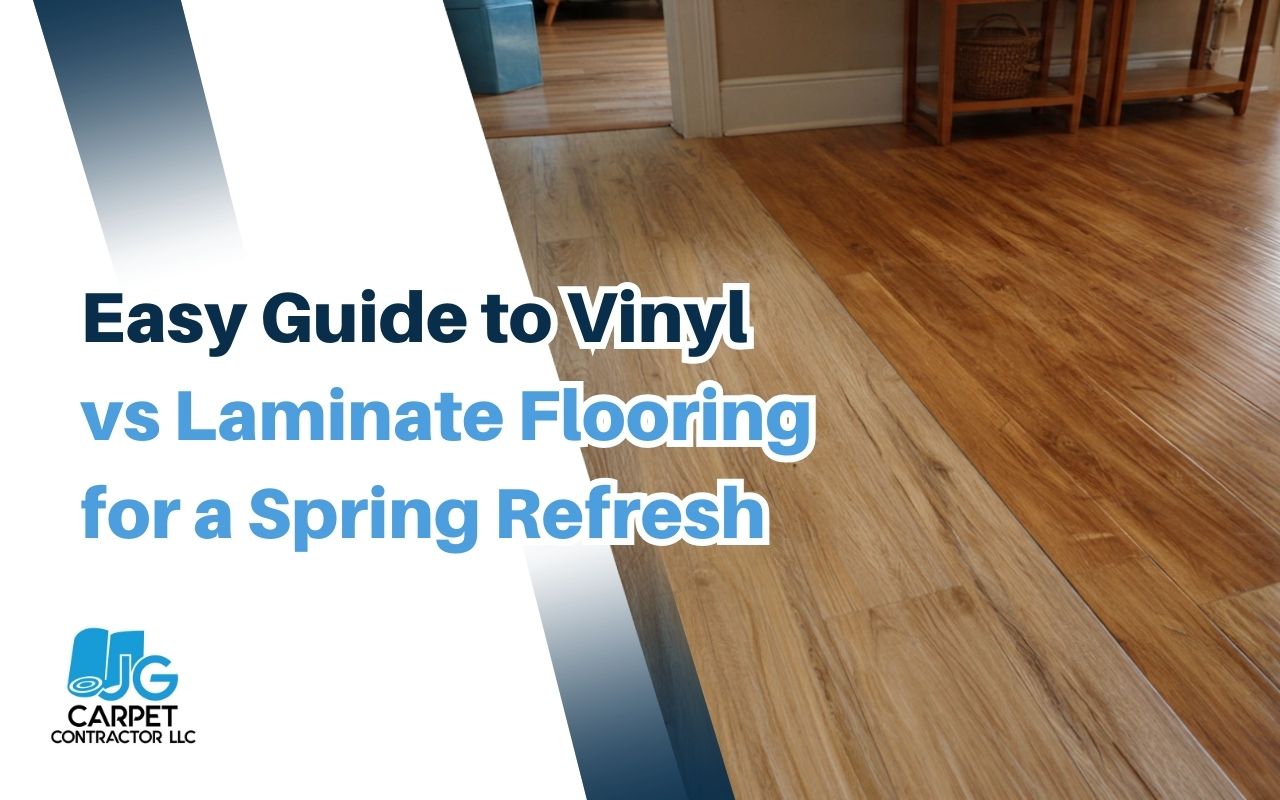
Choose: vinyl vs laminate flooring spring. Spring cleaning often sparks the urge to refresh your living space. Therefore, updating your flooring can feel like a smart next step. Still, choosing between vinyl and laminate can feel big, because each offers clear benefits. For homeowners in Maryland, moisture problems can shape the decision. Vinyl resists water well, while laminate offers a warm, wood-like look.
As you compare options, think about daily life and room use. For example, vinyl can handle spills and humidity with less stress. Meanwhile, laminate can deliver a cozy, classic style. In addition, both can work with floating floor systems for faster setup. Ultimately, learning the pros and cons helps you pick a floor that fits your style and needs.
Moisture Protection and Vinyl Flooring
When Maryland homes face damp air, vinyl often feels like the safer choice. In many homes, vinyl vs laminate flooring spring decisions start with water risk. Vinyl can block water from reaching the layer under it. As a result, it works well in basements, laundry rooms, and kitchens.
- Helps reduce swelling and warping in damp rooms
- Works well for quick cleanups after spills
- Supports a more stable base over time
To explore options for your home, review our vinyl floor installation in Maryland page. Then, you can match product choice to each room’s needs with JG Carpet Contractors LLC.
Everyday Strength and Scratch Protection
Vinyl is built for busy rooms, so it handles daily wear with less worry. In addition, it can resist scuffs from shoes, toys, and chairs. Therefore, families with pets often like it. When you weigh vinyl vs laminate flooring spring projects, this day-to-day toughness can matter a lot.
- Handles foot traffic in halls and entryways
- Stays easier to clean with simple sweeping
- Can look newer longer in active homes
Even so, room use should guide the choice. JG Carpet Contractors LLC can help you compare surface wear based on your routine and layout.
Laminate Style and Natural-Look Designs
Laminate stands out for its wood-like look, and it can make rooms feel warmer. Moreover, it offers many colors and patterns that fit spring décor changes. So, if style leads your list, laminate may feel like the better match. Still, vinyl vs laminate flooring spring planning should also include room moisture and cleaning habits.
- Offers light and dark looks for many styles
- Pairs well with modern, rustic, or classic rooms
- Creates a cozy feel in living areas
If you’re thinking about food spills and steam, read is laminate flooring good for the kitchen. That guide can help you decide with JG Carpet Contractors LLC.
Floating Floor Install for Vinyl and Laminate
Many homeowners like click-together planks, because setup can be faster and cleaner. With this method, boards lock together and rest above the base layer. Therefore, it can reduce mess and speed up work. The floating floor systems approach can also help in rooms where you want less downtime.
- Can reduce install time for many rooms
- Often allows walking on the floor sooner
- May help with light sound softening
In addition, JG Carpet Contractors LLC can advise on underlayment choices and room prep, so the finish looks clean and feels steady.
Frequently Asked Questions
Which is better for a spring update, vinyl or laminate?
It depends on moisture, traffic, and your style goals. However, vinyl often wins in damp areas.
Does vinyl handle Maryland moisture issues better than laminate?
Yes, vinyl tends to handle damp air and spills better. Therefore, it’s often preferred for basements.
Which option is easier to install?
Both can be simple with click-together planks. In many cases, floating floor systems can speed up the process.
What should I consider if I have pets?
Look for floors with better surface durability. Also, ask about scratch resistance for high-traffic zones.
Can laminate work in kitchens?
It can, but you must manage spills quickly. For more context, review the kitchen laminate guide linked above.
How to Choose for Your Spring Refresh
To wrap up, vinyl vs laminate flooring spring choices come down to room conditions and your daily routine. Vinyl is often best where water is common. Meanwhile, laminate can shine in dry spaces where looks lead the way. Also, consider cleaning time, long-term care, and your comfort underfoot.
When you’re ready, contact JG Carpet Contractors LLC through our contact page to discuss your rooms, timeline, and goals. Then, you can move forward with a plan that fits your spring refresh.
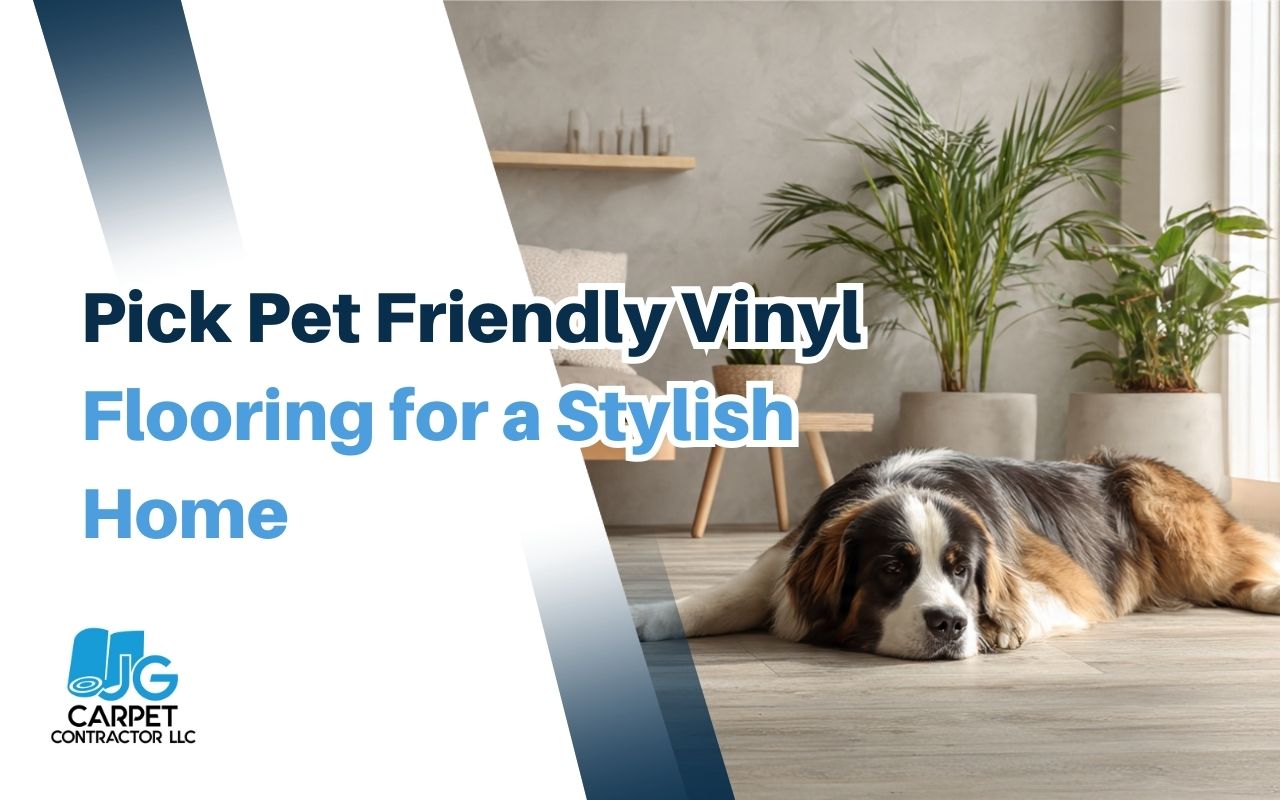
If you have pets, you know how hard it is to keep floors looking clean. However, you can still have a great-looking space. Pet friendly vinyl flooring gives you a smart mix of style and daily strength. It looks modern, yet it stands up to paws, spills, and quick messes.
Because it has a scratch-resistant surface and waterproof build, it handles playtime with ease. As a result, you spend less time worrying about marks. Instead, you enjoy more time with your pets. In this guide, JG Carpet Contractors LLC explains why this option works so well for pet owners.
Benefits of Pet Friendly Vinyl Flooring
Pet owners want floors that look great and still feel easy to live with. Therefore, pet friendly vinyl flooring can be a strong match. With JG Carpet Contractors LLC, you can choose styles that mimic wood or stone without the stress of high upkeep.
- Stylish looks that match many décor styles
- Softer feel underfoot than tile for daily comfort
- Great performance against muddy paws and small spills
- Quick cleanup, so routines stay simple
Also, vinyl often installs faster than many other surfaces. If you want more pet-focused guidance, explore best flooring for pets and see what fits your home best.
Scratch Protection for Busy Pets
Many homes do best with scratch-resistant LVP because it is made for everyday wear. In other words, the top layer helps reduce scuffs from claws and play. JG Carpet Contractors LLC often recommends this option for households with active dogs or curious cats.
- Wear layers help reduce light scrapes and scuffs
- Patterns stay consistent, so small marks blend in
- Daily sweeping helps keep grit from acting like sandpaper
Even so, trimming nails and wiping dirt early can help your floors stay fresh longer. As a result, your rooms keep a clean, smooth look through every season.
Waterproof Floors for Pets That Handle Spills
Accidents happen, so waterproof floors for pets can make life easier. Because moisture does not soak in the same way it can with wood, cleanup feels less stressful. JG Carpet Contractors LLC can help you pick options with strong cores and sealed edges for better protection.
- Helps prevent warping from water bowls and wet paws
- Makes quick wipe-ups feel simple after pet accidents
- Supports a cleaner subfloor by limiting seepage
Additionally, a gentle mop can handle most messes. This way, you protect the surface while keeping odors under control.
Aesthetics and Design Options for Any Room
Pet friendly vinyl flooring can still look high-end. For example, you can pick wood looks, stone looks, and modern patterns with realistic texture. With JG Carpet Contractors LLC, it is easier to match your style goals while still planning for daily pet life.
Moreover, you can choose wide planks, classic tiles, or bold layouts like herringbone. Consequently, you get design freedom without giving up practical performance.
Durability and Long-Term Performance
Strong layers help this flooring hold up over time. The wear layer protects the look, while the core adds stability. Therefore, it can handle busy foot traffic, active play, and heavy furniture. JG Carpet Contractors LLC can guide you toward options that fit your rooms and your routines.
Also, simple habits keep floors looking newer. For instance, sweeping often and wiping spills quickly helps protect the finish and reduces dull buildup.
Easy Maintenance and Cleaning Tips
One reason people choose pet friendly vinyl flooring is the simple upkeep. To keep it looking sharp, build an easy routine. JG Carpet Contractors LLC suggests using gentle tools and pet-safe cleaners, so the protective layer stays in good shape.
- Sweep or vacuum often to remove hair and grit
- Use a damp mop with a mild, pet-safe cleaner
- Avoid harsh chemicals and rough scrubbers
- Blot spills first, then wipe clean
Also, place mats near doors and water bowls. As a result, you reduce tracked-in moisture and limit daily mess.
Installation Considerations
Good prep helps floors last longer. Before installation, the subfloor should be clean, dry, and level. Many planks click together, which can speed things up. However, some spaces may do better with glued options for a tighter feel. For professional help, review vinyl floor installation in Maryland.
Additionally, leaving a small expansion gap helps the floor handle temperature changes. Therefore, the surface stays stable and looks more even over time.
Frequently Asked Questions
Is pet friendly vinyl flooring safe for pets?
Yes, it can be a safe option when you choose quality materials and use pet-safe cleaners. JG Carpet Contractors LLC can help you select a good fit for your home.
Does scratch-resistant LVP fully prevent claw marks?
It helps reduce marks, yet no floor is completely scratch-proof. However, trimming nails and removing grit early can lower the risk.
Are waterproof floors for pets good for kitchens and entryways?
Yes, they often work well in high-mess areas. Because these spaces see water and dirt, waterproof performance can be very helpful.
What are the best cleaning tips for daily pet mess?
Sweep often, wipe spills fast, and use a mild, pet-safe cleaner. Also, avoid rough pads that can dull the finish.
Should I hire a pro or install vinyl myself?
DIY can work for some rooms. Still, a pro can help with subfloor issues and clean edges, especially in larger areas.
Elevate Your Home with Pet Friendly Vinyl Flooring
Pet friendly vinyl flooring helps you keep a stylish look without constant worry. Because it supports scratch protection, moisture control, and easy upkeep, it fits busy homes well. With the right plan, JG Carpet Contractors LLC can help you build a space that stays beautiful while your pets feel at home.
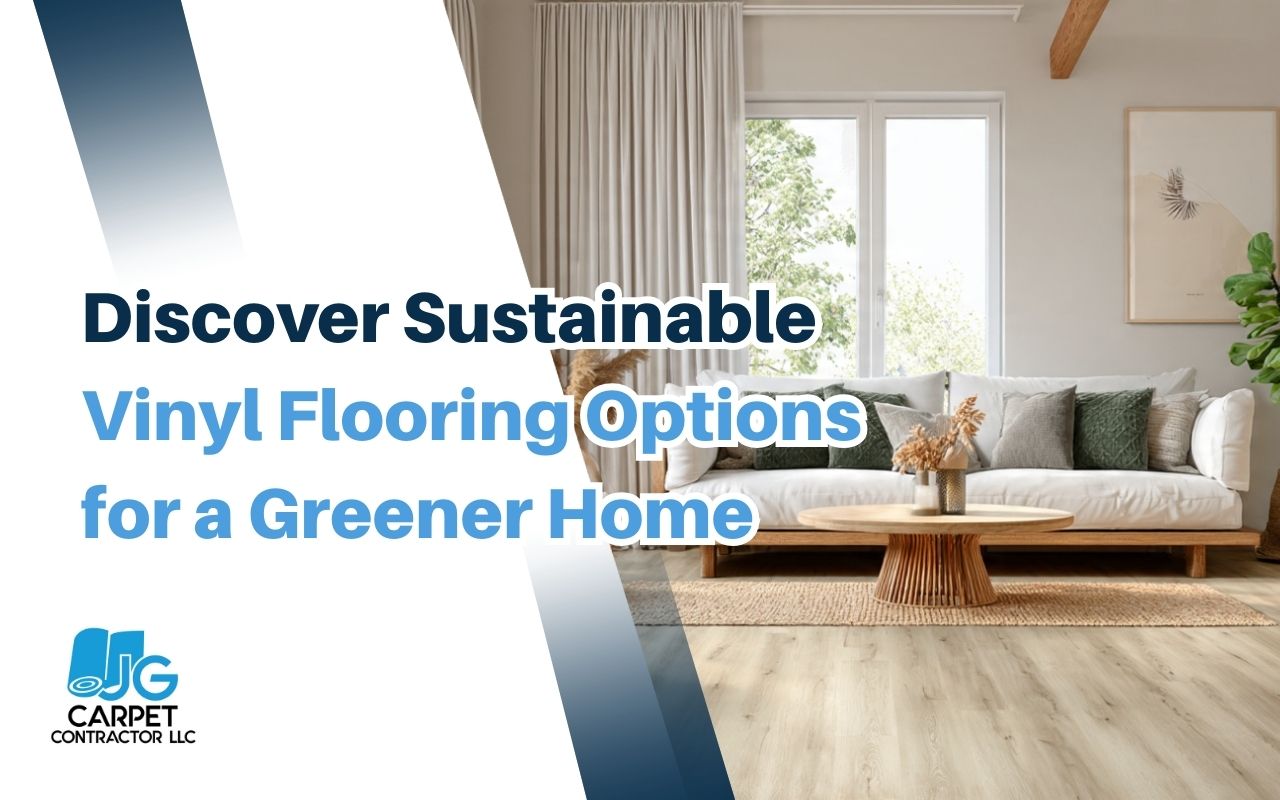
Many homeowners want style, strength, and a lighter impact on the planet. Therefore, sustainable vinyl flooring options can feel like a smart fit for a remodel.
They can look modern and still support healthier choices. In this guide, you will learn what to pick, and why it matters.
Why Sustainable Vinyl Flooring Can Be a Smart Choice
Sustainable vinyl flooring options can support cleaner living and less waste. For example, some products use recycled content, which helps reduce landfill load.
In addition, many homeowners following Maryland green flooring trends like how these floors fit eco-focused goals. Also, they handle moisture well in kitchens and basements.
- Supports lower waste through recycled materials
- Works well in damp areas like bathrooms
- Offers many styles that copy wood or stone
- Often installs faster than tile or hardwood
Low-Emission LVP for Better Indoor Air
Low-VOC LVP is a popular pick for indoor comfort. As a result, it can help reduce harsh smells and support better air in your home.
Also, many brands share clear labels and third-party tests. Therefore, you can choose products that match healthier building goals.
- Look for trusted air-quality labels
- Pick wear layers built for busy rooms
- Choose colors that fit your lighting
- Use simple cleaning to keep the finish
Recycled Vinyl Floors and the Value of Reuse
Recycled vinyl floors help cut plastic waste by reusing leftover vinyl. Consequently, less new material is needed, and more scraps stay out of landfills.
However, style still matters. So, many recycled lines offer looks that copy wood, stone, or tile with strong daily performance.
- Helps reduce plastic waste
- Often keeps strong daily durability
- Comes in many patterns and tones
- Supports a reuse-first mindset
How Durable Are These Floors Over Time?
Sustainable vinyl flooring options can hold up well with daily use. For instance, most planks include a tough top layer that fights scratches and stains.
Unlike wood, they resist swelling from moisture. Also, unlike carpet, they do not hold as much dust over time.
Because durability depends on quality, compare wear layers, core build, and warranty terms. Then, choose what fits your traffic level.
Installation Basics for a Cleaner Project
Many sustainable vinyl flooring options use click-lock edges. Therefore, they can install without glue, which may reduce odors and mess.
Still, a flat base matters. So, start with a clean, dry, and even subfloor for the best result.
If you want local help, explore vinyl floor installation in Maryland for practical planning details.
Maintenance That Stays Eco-Friendly
Simple habits can keep sustainable vinyl flooring options looking new. First, sweep often to remove grit that can dull the surface.
Then, mop with a mild cleaner and water. However, avoid harsh products, since they can damage the top layer and add strong fumes.
Also, add felt pads under chairs and tables. As a result, you reduce marks and help the floor last longer.
Design Ideas Inspired by Maryland Green Flooring Trends
Maryland green flooring trends often lean toward calm, natural looks. So, many homeowners choose warm oak tones, soft grays, or light stone visuals.
In addition, you can change the feel of a room with layout choices. For example, you can try straight planks for a clean look.
- Use light tones to open small rooms
- Try mixed-width planks for a custom feel
- Add rugs made from natural fibers
- Pair plants and neutral paint for balance
Frequently Asked Questions
What makes vinyl flooring more sustainable?
It can use recycled content and cleaner production steps. Also, low-emission options can support healthier indoor air.
Is Low-VOC LVP safe for families?
It can be a better choice for indoor comfort. However, check labels and follow the maker’s install guidance.
Do recycled vinyl floors last as long as regular vinyl?
Many do, especially with a strong top layer. Therefore, compare specs and pick a line made for your traffic level.
Which rooms are best for sustainable vinyl?
Kitchens, baths, and basements are common picks. Since vinyl resists moisture, it often fits those spaces well.
Where can I learn about other green flooring choices in Maryland?
You can review sustainable flooring options in Maryland to compare materials and use-cases.
Make Your Next Flooring Choice More Sustainable
Sustainable vinyl flooring options can support your style goals and your eco values. For example, Low-VOC LVP can improve indoor comfort, while recycled vinyl floors can reduce waste.
If you want guidance for your project, you can also reach JG Carpet Contractors LLC through their contact page. Then, you can match the right floor to your room, timeline, and goals.
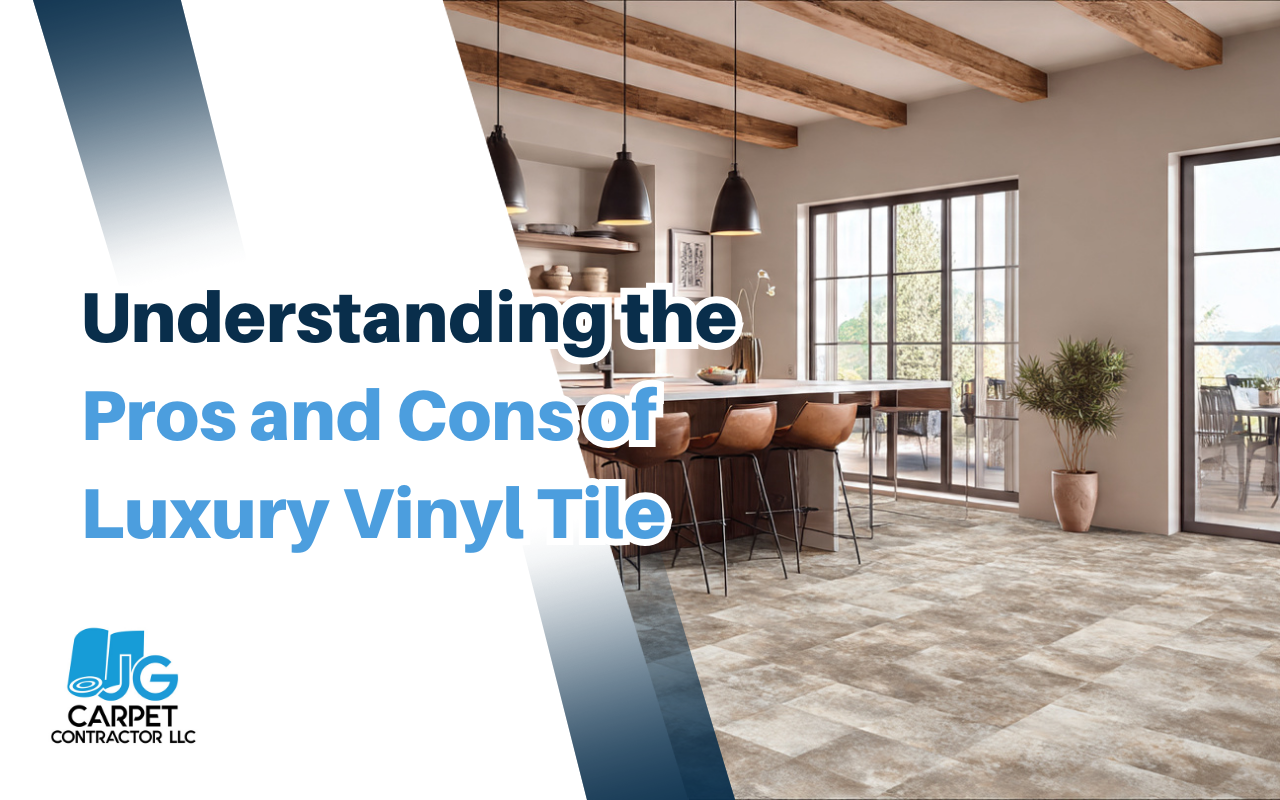
Choosing flooring can feel like picking the right outfit. You want style, comfort, and a good fit for the space. Pros and Cons of Luxury Vinyl Tile matter most in busy areas like kitchens, where daily life can be tough on floors.
Luxury Vinyl Tile (LVT) is a multi-layer vinyl floor that can look like stone or wood. It uses a strong wear layer, a printed design layer, and a stable base layer. Because of this build, it can look realistic while handling everyday use.
Durability and resilience in daily life
When people compare the Pros and Cons of Luxury Vinyl Tile, durability is often the first topic. LVT handles foot traffic, pet claws, and dropped items better than many floors. Also, the wear layer helps protect against scratches, stains, and scuffs.
In many brands, Updated LVT durability 2026 includes stronger coatings and tougher wear layers. For example, some lines use enhanced urethane finishes or added particles for extra strength. Even so, good care still helps the floor last longer.
- Handles high traffic in busy rooms
- Resists many everyday scratches and scuffs
- Stays stable through normal temperature changes
- Often keeps its look for years with basic care
Stylish design options for modern homes
LVT offers many looks, which is a big reason it stays popular. It can copy wood, stone, and ceramic visuals with high-detail printing. In addition, many tiles include edges and textures that make the surface feel more natural.
If you want Flooring for kitchens that looks high-end without the same upkeep, LVT can help. You can also mix sizes and patterns to create a custom layout. As a result, it fits both classic and modern styles.
- Wood-look styles with realistic grain detail
- Stone-look tiles with grout-line visuals
- Modern patterns like hex shapes and large formats
- Textured finishes for a more natural feel
Easy installation process
Many homeowners like LVT because it can be easier to install than traditional tile. Many products use click-lock edges, so pieces snap together without messy glue. Because it is a floating floor, it can expand and shrink with normal changes in temperature.
Still, prep matters. A smooth subfloor helps the tiles sit flat and look clean. For larger spaces or detailed patterns, working with a pro can also reduce waste and improve the final finish.
Low maintenance requirements
For daily cleaning, LVT is simple. Sweeping or vacuuming removes grit, and a damp mop handles most spills. Also, it does not need sealing, waxing, or special treatments like some natural surfaces.
This is why many people choose it for busy homes. It can also feel cleaner than carpet because it does not trap dust and pet hair in the same way. However, using gentle cleaners helps protect the wear layer.
Comfort and softness underfoot
LVT has a softer feel than stone or ceramic. Because it has layers, it can feel slightly cushioned when you stand on it. Therefore, it can reduce fatigue during cooking or long prep sessions.
It can also feel less cold in cooler months. In some setups, it works with radiant heat as well. Plus, it may help soften sound in open layouts, which can make the room feel calmer.
Water resistance and moisture tolerance
For Flooring for kitchens, water performance is a key factor. LVT is water-resistant and can handle splashes better than hardwood. In addition, some products are built to be fully waterproof.
Even so, it is smart to wipe standing water quickly. That habit helps protect seams and keeps the floor looking its best over time.
- Handles spills and humidity better than hardwood
- Works well in kitchens, baths, and basements
- Many click systems create tight seams
- Quick cleanup helps prevent long-term seam issues
LVT vs LVP: what’s the real difference?
LVT vs LVP is mostly about shape and the look you want. LVP is made to look like long wood planks. LVT comes in tile shapes, such as squares or rectangles, which can suit stone or ceramic styles better.
Both options often share similar benefits, such as easy cleaning and strong wear layers. So, the best choice depends on your design goal and how you want the room to feel.
Environmental impact and sustainability considerations
LVT is a synthetic material, so it comes with tradeoffs. However, many brands now add recycled content in the core or backing. Also, some products aim for lower chemical emissions to support better indoor air quality.
To make a smarter pick, look for third-party certifications that focus on low VOCs. In some cases, brands also offer take-back programs. As a result, you can balance performance with a more thoughtful choice.
Potential drawbacks to consider
To weigh the Pros and Cons of Luxury Vinyl Tile fairly, you need to look at the downsides too. Heavy furniture can leave dents, especially with sharp legs or wheels. Also, smooth surfaces can feel slippery when wet.
Some glued installations are harder to remove later. In addition, sharp objects can puncture vinyl, and lower-quality products may fade in strong sunlight. Therefore, picking a better wear layer and using window coverings can help.
Key advantages of LVT
Although LVT has limits, it still offers strong day-to-day value. It can deliver a realistic look, simple care, and good moisture resistance. Because of that mix, it is often a practical choice for busy homes.
- Realistic appearance with modern printing
- Easy to clean with simple routine care
- Water-resistant performance for active rooms
- Fast installation for many floor plans
- Wide range of styles and textures
Frequently Asked Questions
Is Luxury Vinyl Tile good for kitchens?
Yes. It is water-resistant, easy to clean, and comfortable to stand on. That is why Flooring for kitchens is a common use for LVT.
What is the biggest difference in LVT vs LVP?
The main difference is shape and style. LVT looks like tile or stone patterns, while LVP looks like long wood planks.
What does Updated LVT durability 2026 usually mean?
It often refers to stronger wear layers and improved top coatings. Some lines use tougher finishes to reduce scuffs and stains.
Can LVT dent from heavy furniture?
Yes, it can. Use felt pads and wide furniture feet to spread weight. This helps protect the surface over time.
Do I need a professional installer for LVT?
Not always. Many click-lock floors are DIY-friendly. However, pros can help with subfloor prep and complex patterns.
Is Luxury Vinyl Tile the right choice for your home?
The Pros and Cons of Luxury Vinyl Tile come down to your space and your priorities. LVT offers strong durability, flexible designs, and easy care. It also performs well in high-use areas with moisture, like kitchens.
At the same time, dents, slipperiness when wet, and sunlight fading can be concerns. If you want expert guidance for your project, explore the benefits of LVT flooring for MD homes. Then, for planning and next steps, review vinyl floor installation in Maryland and reach out through the contact page.